
Building or maintaining a deck is one of the best ways to enhance your outdoor living space. However, many homeowners overlook a crucial element of deck construction: moisture protection. Over time, water damage can cause rot, corrosion, and structural failure in both wood and metal components. That’s where deck moisture barriers come in. In this comprehensive guide, we’ll cover everything you need to know about deck moisture barriers: what they are, the different types available, how they work, and how to install them properly to maximize your deck’s lifespan and performance.
What Is a Deck Moisture Barrier?
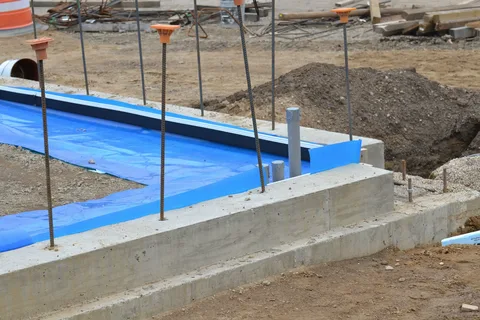
A deck moisture barrier is a protective layer applied to or installed between components of a deck to prevent water intrusion. It’s designed to stop moisture from penetrating wood fibers, metal connectors, or the ledger board, all of which are vulnerable to decay when exposed to moisture over time.
Moisture barriers serve several purposes:
- Prevent wood rot and decay: Especially where boards meet joists or fasteners.
- Stop corrosion: Protects screws, nails, and metal connectors from rust.
- Extend lifespan: Prevents structural weakening due to trapped moisture.
- Improve safety: Reduces risk of hidden damage under deck boards.
- Minimize maintenance: Keeps the deck frame stronger and drier for longer.
Why Deck Moisture Barriers Matter
Decks are constantly exposed to rain, snow, and humidity. Even treated lumber isn’t immune to moisture damage, particularly in areas where water tends to collect like joist tops, post bases, or the ledger board where the deck attaches to the house.
Without a moisture barrier, small gaps between boards and framing can trap water. Over time, this causes the following issues:
- Wood rot: Especially around fasteners and joints.
- Metal corrosion: Accelerated rust on screws, nails, and joist hangers.
- Mold and mildew growth: Can weaken deck structure and create unpleasant odors.
- Splitting and warping: Wood expands and contracts when wet, leading to cracks.
By installing a moisture barrier, you create a waterproof or water resistant layer that protects against these issue saving thousands of dollars in potential repairs.
Types of Deck Moisture Barriers
There are several types of deck moisture barriers, each designed for specific applications. The right choice depends on your deck design, materials, and budget.
Joist Tape (Butyl or Asphalt Based)
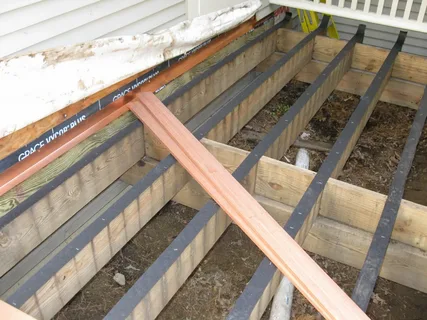
Joist tape is one of the most common and cost effective moisture barriers. It’s a waterproof adhesive tape applied along the top of joists, beams, and ledger boards before decking boards are installed.
Benefits:
- Easy to apply and cost efficient.
- Prevents moisture from seeping into screw holes.
- Self seals around fasteners for long lasting protection.
- Compatible with pressure treated lumber.
Types:
- Butyl Tape: More flexible, UV resistant, and longer lasting. Ideal for hot climates.
- Asphalt Tape: More affordable, but can degrade faster under sunlight.
Best for:
Joists, beams, and ledger boards on wood framed decks.
Liquid or Brush On Membranes
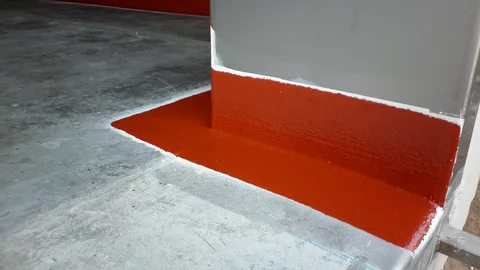
These are liquid waterproofing coatings applied with a brush or roller over deck framing or subfloor surfaces. When they dry, they form a flexible waterproof membrane.
Benefits:
- Seamless coverage over irregular shapes.
- Strong adhesion and durability.
- Can be used on plywood, concrete, or wood.
Drawbacks:
- Requires proper curing time before deck boards are installed.
- More labor intensive than tape.
Best for:
Decks over living spaces or flat roof decks that need watertight protection.
Peel and Stick Membranes
Similar to joist tape but broader in width, peel and stick membranes are rolled over large surfaces like the entire deck subfloor. They create a full waterproof barrier.
Benefits:
- Excellent moisture protection.
- Protects entire surface area, not just joists.
- Often used under composite decking or waterproof decking systems.
Drawbacks:
- Higher cost than standard tape.
- Must be carefully installed to avoid air bubbles.
Best for:
Decks above enclosed areas (e.g., patios, garages, or rooms) or where total waterproofing is required.
Flashing Tape or Metal Flashing
Flashing materials are typically used around critical connections, especially the ledger board, which is the structural piece that attaches the deck to your house.
Options include
- Flashing tape: Flexible and easy to apply; seals around fasteners.
- Metal flashing: Durable and long lasting; ideal for structural joints.
Best for
Ledger boards, posts, and transition areas between the deck and house.
Waterproof Under Deck Systems
Under deck drainage or waterproofing systems are installed beneath the deck boards to divert water away from the framing and create a dry area underneath.
Benefits
- Keeps the underside of the deck dry.
- Ideal for multi level decks with usable space below.
- Adds functionality and protection.
Drawbacks
- Higher installation cost.
- Typically installed during deck construction, not after.
Best for
Homeowners who want a waterproof living area below their deck.
How to Install Deck Moisture Barriers
Proper installation is essential for maximum protection. Here’s a step by step overview for each type:
Installing Joist Tape
- Clean the surface: Ensure joists and beams are dry and free from debris or sawdust.
- Measure and cut tape: Cut lengths slightly longer than each joist.
- Apply the tape: Peel the backing and press the tape firmly along the joist top, wrapping slightly over the edges.
- Seal fastener holes: The tape will self seal when screws or nails penetrate it.
- Repeat: Continue across all joists, beams, and ledger boards.
Installing Peel and Stick Membranes
- Prepare the subfloor: Make sure it’s clean, dry, and smooth.
- Lay the membrane: Start at one edge and roll out the material.
- Press firmly: Use a roller or hand pressure to eliminate bubbles.
- Overlap edges: Overlap seams by at least 2 inches for complete coverage.
- Trim and seal: Cut excess at the deck’s perimeter and seal any gaps.
Applying Liquid Membranes
- Clean the surface: Remove dirt, oils, and moisture.
- Prime (if required): Some products need a primer coat.
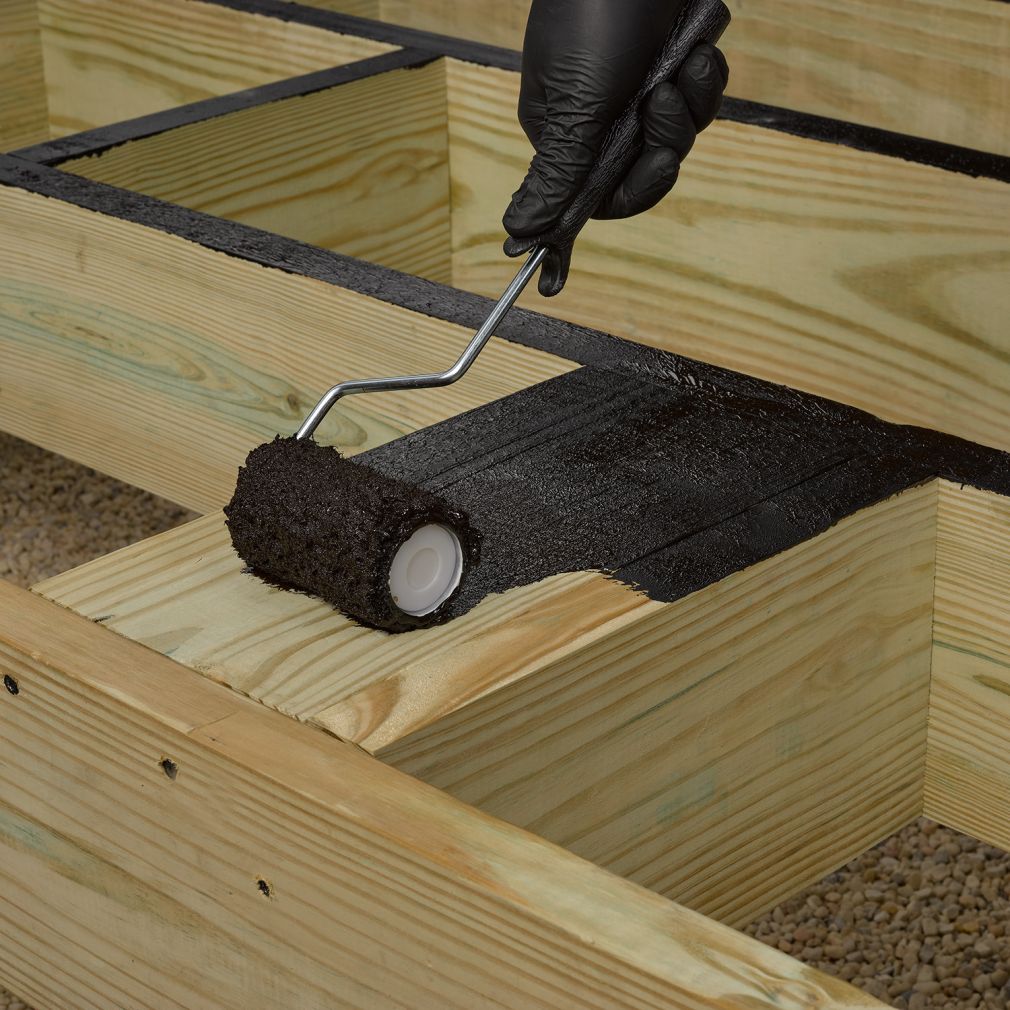
- Apply evenly: Use a brush or roller to coat joists and subfloor areas.
- Allow to cure: Wait until the membrane dries fully before installing deck boards.
Installing Flashing
- Ledger board protection: Apply flashing tape or metal flashing along the top and behind the ledger board.
- Overlap correctly: Ensure the top edge of the flashing sits beneath the siding and overlaps the bottom edge to direct water away.
- Seal corners: Use compatible sealant at all joints and seams.
Maintenance Tips for Long Lasting Moisture Protection
Even with a moisture barrier installed, routine maintenance helps ensure long term protection.
- Inspect annually: Check for any lifting, cracking, or exposed wood on joists and framing.
- Keep the deck clean: Sweep debris and prevent standing water.
- Maintain proper ventilation: Allow airflow under the deck to reduce humidity buildup.
- Reapply coatings when needed: Liquid membranes and tapes can degrade over time; inspect every few years.
- Clean gutters and downspouts: Prevent water overflow onto deck surfaces.
Common Mistakes to Avoid
- Skipping ledger flashing: This is a leading cause of deck rot near the house.
- Using incompatible materials: Not all tapes or membranes bond well with treated lumber.
- Trapping moisture: Avoid overlapping layers in ways that hold water.
- Applying on wet wood: Always install barriers on dry, clean surfaces for best adhesion.
- Ignoring fastener holes: Make sure all screw and nail penetrations are sealed.
Conclusion
A deck is a major investment, and protecting it from moisture damage is essential for long term durability. Whether you choose joist tape, liquid membrane, peel and stick barriers, or a full under deck drainage system, the right deck moisture barrier can significantly extend your deck’s lifespan. By understanding the different types, installation techniques, and maintenance practices, you can ensure your deck stays structurally sound, safe, and beautiful for many years. Proper moisture protection isn’t just an upgrade it’s a smart, cost effective way to safeguard your outdoor living space from the elements.